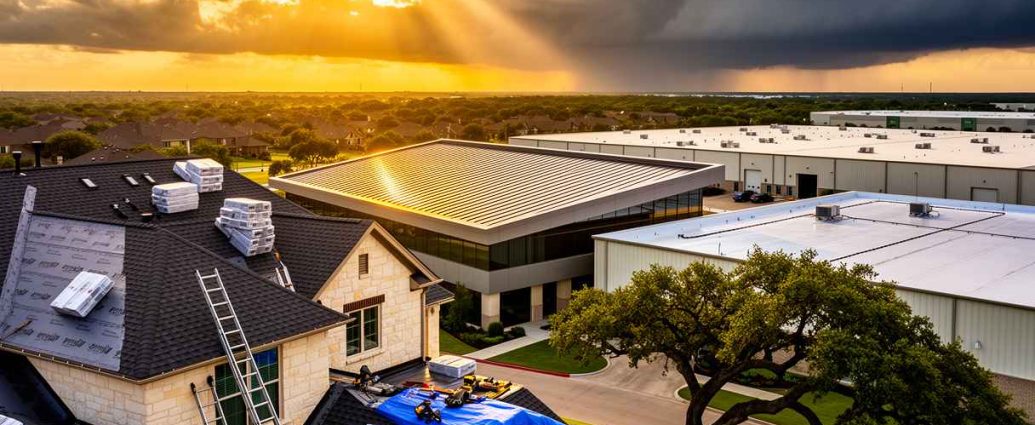
Roofs in Cedar Park do more than cap a home or business—they work overtime against relentless UV, sudden hailstorms, wind gusts that race across the Hill Country, and rain events that test every seam and flashing. Property owners in Cedar Park, Leander, Round Rock, Georgetown, and greater Williamson County face a unique blend of weather and terrain that demands durable systems, skilled installation, and proactive care. From architectural asphalt to standing seam metal and high-performance flat roofing, the right choice starts with local knowledge. With the right approach, a roof can boost curb appeal, stabilize indoor comfort, control energy costs, and provide resilient storm protection for years to come.
What Cedar Park Homes and Businesses Need from a Roof
Central Texas sun is intense. UV exposure and 100-degree stretches accelerate asphalt aging, dry out sealants, and amplify thermal expansion and contraction. A well-designed Cedar Park roof counters this with heat-tolerant materials, reflective surfaces, and balanced ventilation. For sloped roofs, Class 4 impact-rated shingles are a smart defense against hail; many products combine high definition styling with rubberized asphalt layers that resist cracking. Standing seam metal roofing is another standout for the region: it sheds debris from live oaks and elms, delivers excellent wind resistance with concealed fasteners, and reflects a significant portion of solar radiation when paired with cool roof coatings or light colors.
Wind and water management are equally critical. Valleys, eaves, and penetrations must be protected with premium underlayments, such as high-temperature synthetic options and self-adhered membranes in leak-prone areas. Properly detailed step flashing along walls and chimneys, metal drip edges, and sealed fasteners help maintain a water-tight envelope during heavy downpours. Commercial and industrial sites with flat or low-slope sections benefit from TPO or PVC membranes with hot-air welded seams that resist ponding and uplift; tapered insulation can direct water to drains and scuppers, preventing standing water that shortens a roof’s life.
Ventilation and attic health are non-negotiable in Cedar Park’s heat. Continuous ridge vents paired with soffit intake keep airflow moving, reducing attic temperatures and preventing moisture build-up that can rot decking. When combined with radiant barrier decking or reflective underlayments, the system can help stabilize interior comfort and may lower energy usage. Don’t overlook gutters sized for cloudbursts and routed to move water away from slab foundations—critical in clay soils common across the Austin metro. Finally, plan for the local landscape: tree canopies are beautiful but drop leaves and acorns that clog gutters and hold moisture. Regular maintenance—especially after storms—keeps those details performing.
Neighborhood style and HOA guidelines also matter. Many Cedar Park communities favor dimensional asphalt profiles or metal accents over entries and porches. A roof that blends aesthetics, durability, and local code compliance will protect your investment while enhancing curb appeal. Partnering with pros who know municipal requirements, permitting processes, and manufacturer standards ensures the system will stand up to both inspectors and the next major storm.
Repair, Replacement, and Materials: Choosing the Right System
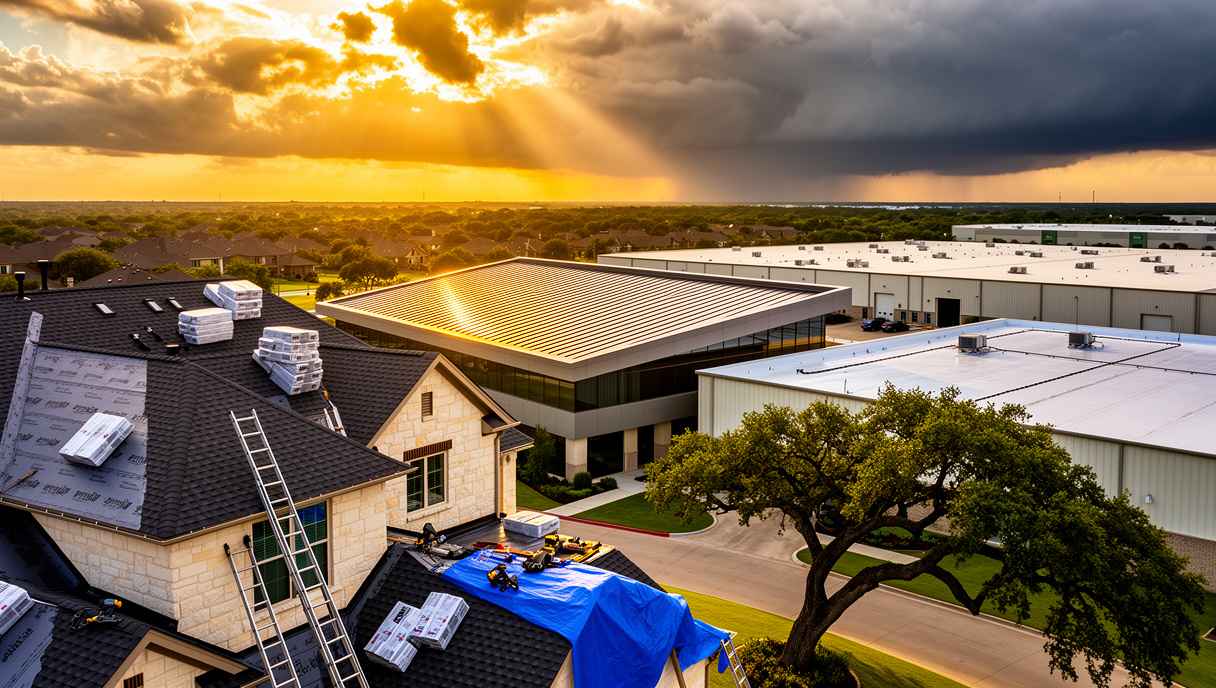
Every roof tells a story—granule loss signaling UV wear, lifted shingles hinting at wind damage, soft decking betraying long-term leaks, or flat roofs with ponding that telegraphs drainage issues. A detailed inspection distinguishes between targeted roof repair and full replacement. If the roof is relatively young and damage is isolated—say, a hail-impacted slope or a failed flashing—repairs can extend service life. But widespread granule loss, brittle shingles, multiple previous patches, or systemic membrane failure on a flat roof typically point toward replacement for long-term value.
Material selection reflects both performance and budget. Dimensional asphalt shingles remain a top pick for Cedar Park homes, especially impact-rated lines that resist hail and can reduce future repairs. Metal roofing—often standing seam with concealed clips—delivers superior wind, hail, and fire resistance along with decades-long lifespans; modern underlayments and decking make metal quieter than many expect. For commercial and industrial properties, single-ply systems like TPO or PVC offer reflective surfaces for energy efficiency, strong welded seams, and reliable performance on low slopes. In some cases, elastomeric roof coatings can restore a sound but aging membrane, adding reflectivity and sealing minor cracks without a full tear-off.
Under the surface, components matter. High-temp synthetic underlayments stand up to radiant heat and help prevent wrinkling that can telegraph through shingles. Self-adhered membranes around valleys, skylights, and vents provide extra insurance in Cedar Park’s heavy rains. Corrosion-resistant fasteners and properly sized ridge caps protect against uplift during gusty fronts. Balanced ventilation—soffit intake and ridge exhaust—reduces heat buildup and protects against condensation. For energy-aware upgrades, consider radiant barrier decking or cool-rated shingles and membranes to reflect solar load.
When storms strike, quick response limits damage. Emergency tarping, temporary drying, and documented photos create a clear trail for insurance adjusters. A thorough inspection catalogs impacts to shingles or panels, gutters, vents, skylights, and flashing, noting hail size and wind direction. Reputable local teams provide transparent scopes of work, clear material options, and straightforward timelines. Just as important, they install to manufacturer specs so warranties remain valid. Whether the job is a focused repair or a complete tear-off and new system, disciplined processes and quality materials produce a roof that performs through the next heat wave and hail event.
Local Scenarios and Best Practices: From Hail Response to Preventive Care
Real-world examples across Cedar Park show how attentive planning and materials deliver value. In a Buttercup Creek home with repeated attic hot spots and premature shingle aging, an inspection revealed insufficient soffit intake and blocked baffles. The solution paired ridge venting with properly sized soffits, added high-temp synthetic underlayment, and upgraded to impact-rated architectural shingles. The homeowners reported cooler second-floor rooms in summer and improved shingle performance during a subsequent hailstorm. In a small retail strip near 183A, a low-slope roof developed seam splits and ponding after heavy spring rains. A TPO retrofit with tapered insulation and welded seams eliminated standing water and reduced interior heat gain, helping tenants cut cooling costs.
Hail response requires speed and precision. After a storm, look for bruised shingles that feel soft under light finger pressure, dents in ridge caps and metal vents, and displaced granules collecting in gutters. On metal roofs, check for panel dents, seam distortion, and compromised flashing. Flat roofs may show membrane pockmarks or punctures around rooftop equipment. Even if leaks aren’t immediately visible, micro-damage can shorten a roof’s lifespan. Scheduling a professional inspection helps determine whether spot repairs, partial slope replacement, or a full system upgrade is the right move. For many properties, upgrading to Class 4 shingles or thicker metal gauges pays back quickly in reduced maintenance and better storm resilience.
Preventive care is the quiet hero of roof longevity. Twice-yearly inspections—ideally in spring after hail season threats begin and fall before winter fronts—catch small issues before they escalate. Technicians should check flashing at walls and chimneys, re-seal penetrations around vents and pipes, clear debris from valleys and gutters, and verify that attic ventilation remains balanced. For homes with solar arrays or satellite mounts, confirm that brackets and sealants are intact. Property managers in Round Rock and Georgetown find that documented maintenance logs help forecast capex and support warranty claims. Trimming back overhanging branches stops abrasion and helps roofs dry faster after rain, reducing algae streaking and granule loss.
Local expertise ties everything together. Crews familiar with Cedar Park’s codes, HOA preferences, and storm patterns can recommend systems that look great and last. Whether the need is residential shingle replacement, a new standing seam installation, or a flat roof retrofit for a warehouse, choosing proven materials and detail-focused installation pays dividends in performance. For a single, locally grounded resource on materials, inspections, maintenance, and emergency response, explore Cedar park roofing and align your project with standards built for the Hill Country’s toughest weather.

Mogadishu nurse turned Dubai health-tech consultant. Safiya dives into telemedicine trends, Somali poetry translations, and espresso-based skincare DIYs. A marathoner, she keeps article drafts on her smartwatch for mid-run brainstorms.