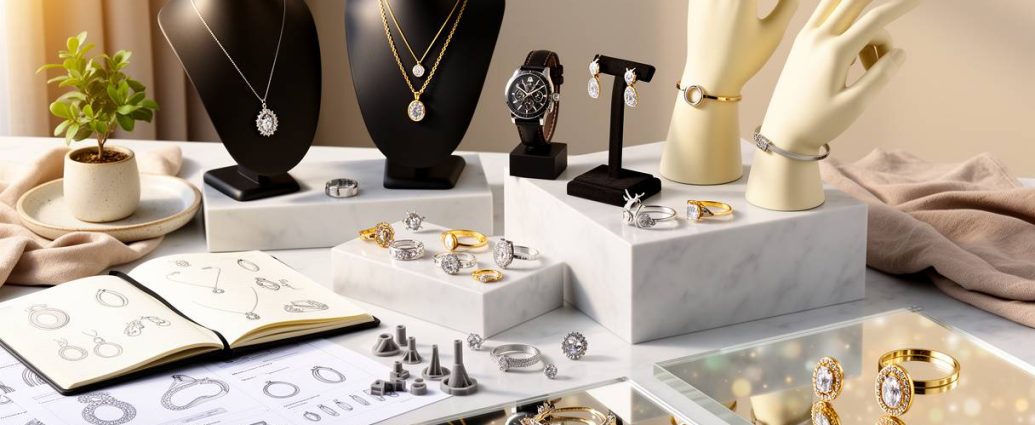
Jewellery is one of the most challenging categories to photograph. Tiny surfaces bounce light unpredictably, gemstones need faithful color reproduction, and every micro-scratch shows under studio lamps. Yet in today’s omnichannel world, brands need dozens—often hundreds—of images per SKU for product pages, campaigns, marketplaces, print, and social. That tension between perfection and speed is exactly where AI jewellery product photography excels. By fusing computer vision with photorealistic rendering, modern platforms can turn sketches, CAD files, or simple packshots into launch-ready visuals in hours instead of weeks, while maintaining the precision buyers expect from fine pieces. For artisans, designers, and fast-growing luxury labels, this unlocks consistent, scalable content creation—without booking studios, wrangling props, or reshooting to correct a single misaligned highlight. The result is a reliable pipeline of images that carry the brand’s signature style, showcase materials accurately, and convert browsers into buyers.
Why AI Is Transforming Jewellery Product Photography
Conventional jewellery photography demands painstaking control. Metals like platinum, gold, and polished steel behave like mirrors, and gems introduce dispersion, scintillation, and intricate facets that are difficult to light uniformly. Achieving the perfect “kiss” of highlight on a domed band while preserving the true hue of an emerald can take hours per frame. Multiply that by multiple angles, sizes, finishes, and on-model looks, and traditional shoots quickly strain timelines and budgets. AI changes this calculus by making quality both repeatable and rapid. With trained models informed by optical behavior, AI tools simulate realistic reflections, micro-contrast, and gemstone brilliance, then harmonize these with brand-defined lighting styles. The outcome is a set of images that look like they came from an expert macro studio—delivered at the pace of modern e-commerce.
Speed doesn’t have to mean compromise. Advanced pipelines support color-managed workflows to help maintain brand-consistent gold tones and accurate gemstone saturation across devices. Smart segmentation preserves the fine delineation between prongs and stones, while virtual depth of field mimics premium macro lenses for that coveted creamy falloff. Consistency also becomes trivial: set a base look—a soft-box key with a gentle negative fill and a floating natural shadow—and apply it across a whole collection. The same system can produce packshots for PDPs, lifestyle scenes for social, and on-model images for lookbooks, all aligned to the brand’s aesthetic.
For growth-minded teams, the bigger win is scalability. AI enables instant colorway variations (yellow, white, or rose gold), gem swaps (sapphire to ruby), and setting adaptations without rebuilding the entire lighting setup. Need 2K web-ready images today and 4K print assets for tomorrow’s trade show? Generate both from the same master. Marketplaces and retailers often impose strict requirements on backgrounds, margins, and angles; AI pipelines can bake in those templates to ensure compliance. This level of control reduces reshoots, eliminates seasonal bottlenecks, and keeps product releases on schedule—even when collections are finalized at the last minute.
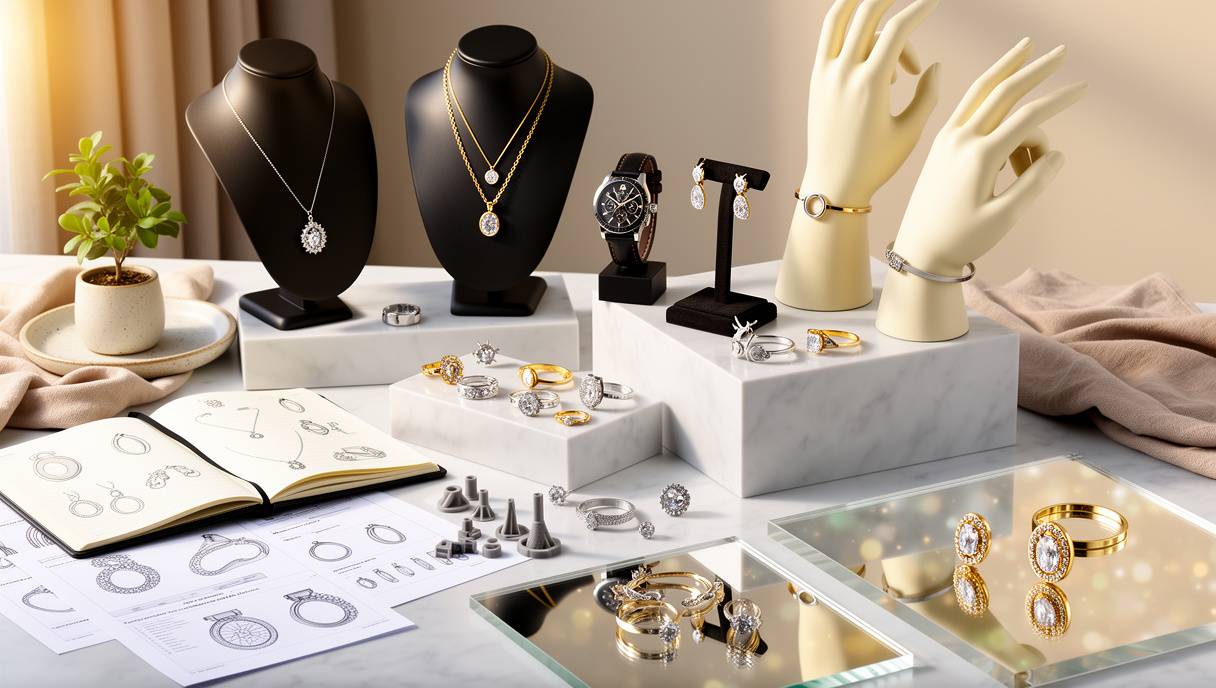
From Sketch or CAD to Studio-Quality Visuals
The modern workflow begins where your design process lives. If your piece exists as a sketch, AI can extrapolate a photo-real concept for early feedback and pre-launch teasers. If you have a CAD file, the system can interpret geometry, apply brand-specific metal and gemstone libraries, and generate realistic materials with anisotropic reflections, sub-surface details, and believable micro-roughness. If you already have a basic photo, AI-driven relighting and background replacement can transform a solid capture into a cohesive suite of assets. A drag-and-drop studio interface simplifies styling: choose camera angles (hero 45°, top-down, tight macro), set focal length, adjust virtual reflectors, and pick the shadow style—floating, contact, or mirrored pedestal—then save as a preset for the entire collection.
Once the foundation is set, content variants become almost effortless. Turn a solitaire into a full stack with complementary bands, generate on-hand imagery across a spectrum of realistic skin tones, or place pieces in editorial scenes that reflect your brand world—minimalist marble, sunlit atelier, or velvet-lined vitrines. Lifestyle shots benefit from compositing and perspective-matching tools that anchor jewellery naturally on props or models, while preserving metal clarity and stone fire. For DTC brands, this makes A/B testing faster: swap the background color, try a slightly higher key light, or adjust the macro depth to see which image converts best on the PDP. For wholesalers, batch-render consistent angle sets to meet retailer image specs.
Output flexibility is equally important. Generate crisp 2K imagery for product listings, 4K for high-impact ads and catalogs, and square or vertical crops tuned for social placements. Maintain one source of truth with structured file naming, embedded color profiles, and layered export options to streamline handoffs to marketing or print vendors. And when you’re ready to explore a platform that unifies these capabilities for AI jewellery product photography, make sure it supports quick iteration, robust material control, and export presets tailored to your channels.
Real-World Use Cases, Best Practices, and Local Marketing Wins
Consider a London-based artisan launching a bridal collection. With AI, they can upload CADs to generate a full set of white-background packshots for PDPs, highlight-detail macros for social carousels, and soft editorial scenes featuring velvet ring boxes for campaign emails—all in a single afternoon. Marketplace-ready images with exact canvas sizes and margins ensure instant compliance, enabling simultaneous listing on their own site, regional retailers, and global platforms. Meanwhile, a New York microbrand in watches can build on-wrist visuals across diverse skin tones, tailor strap textures, and produce city-specific backdrops—Cobble Hill brownstones for Brooklyn ads, or Midtown chrome for business-focused creatives—amplifying local relevance without location shoots.
There’s also value for heritage houses. A Milan atelier with an archive of CAD files can revive classic designs into modern, photoreal visuals to test market interest before committing to production. Early concept images can be used in lookbooks, trade presentations, or wholesale line sheets, de-risking manufacturing by validating styles with buyers. For emerging labels, AI bridges the gap between creativity and commercial execution: when the final rhodium finish is chosen or a stone grade is updated, it’s quick to propagate those changes across every visual, preserving accuracy and trust with discerning customers.
To capture the full upside, apply a set of best practices. First, start with high-quality inputs: clean CAD geometry, or if working from photos, opt for sharp, well-exposed captures with minimal compression. Provide material specs—karat, plating, gemstone type, and intended finish—so the AI can simulate true-to-life metal behavior and gem optics. Maintain a consistent angle kit: a primary hero (around 35–50mm equivalence), a profile, a top-down, and a macro detail. Use consistent lighting recipes across collections to reinforce brand identity; save presets for packshots, lifestyle, and on-model to keep teams aligned. Build a gemstone and metal “swatch” library so color and reflectance remain stable between seasons. For color fidelity on premium lines, review proofs on calibrated displays and lock ICC profiles for print.
Operationally, implement version control and structured naming to keep PDP assets, ads, and print masters organized. Document retailer and marketplace requirements (background, pixel dimensions, margin, file format) as reusable export presets. On the creative side, map visuals to funnel objectives: macro sparkle for awareness, lifestyle context for consideration, and clean white-background packshots for conversion. If using on-model imagery, diversify hand shapes and skin tones for inclusivity and social resonance. Ethical clarity matters too—ensure visuals remain product-true. If rendering pre-production concepts, mark them accordingly until the physical piece is finalized. When used responsibly, AI jewellery product photography preserves authenticity while delivering the speed and scale modern commerce demands.
Finally, think locally and seasonally. Campaigns that echo regional aesthetics—coastal light for the South of France, warm interiors for Scandinavian winters, or festive palettes for Diwali or Lunar New Year—can be generated without location shoots, allowing rapid creative pivots for each market. Pair this with fast iteration cycles: swap scene props (silk, marble, glass), test background hues against your metals and stones, and let performance data guide refinements. With the right toolkit, brands of any size can present pieces with the polish of a world-class studio, reaching customers across cities and seasons while keeping production costs—and timelines—tightly under control.

Mogadishu nurse turned Dubai health-tech consultant. Safiya dives into telemedicine trends, Somali poetry translations, and espresso-based skincare DIYs. A marathoner, she keeps article drafts on her smartwatch for mid-run brainstorms.