How a Heat Interface Unit Works—and Why Radiators Go Cold
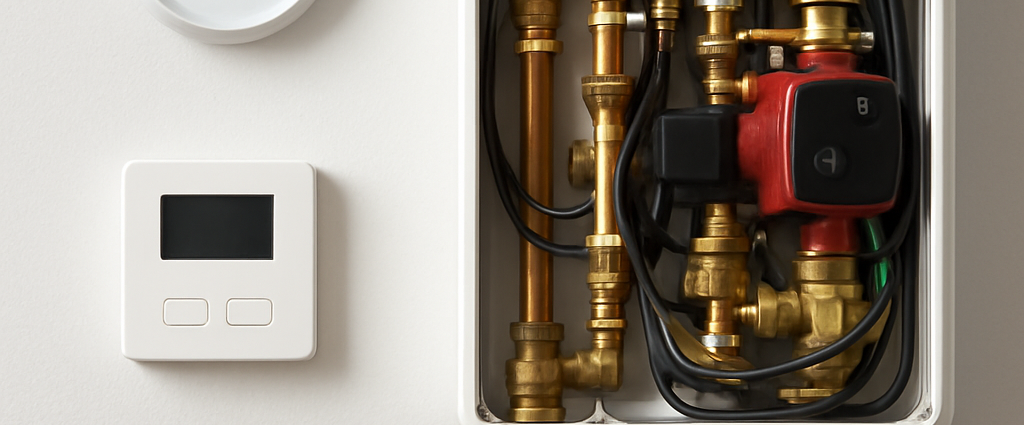
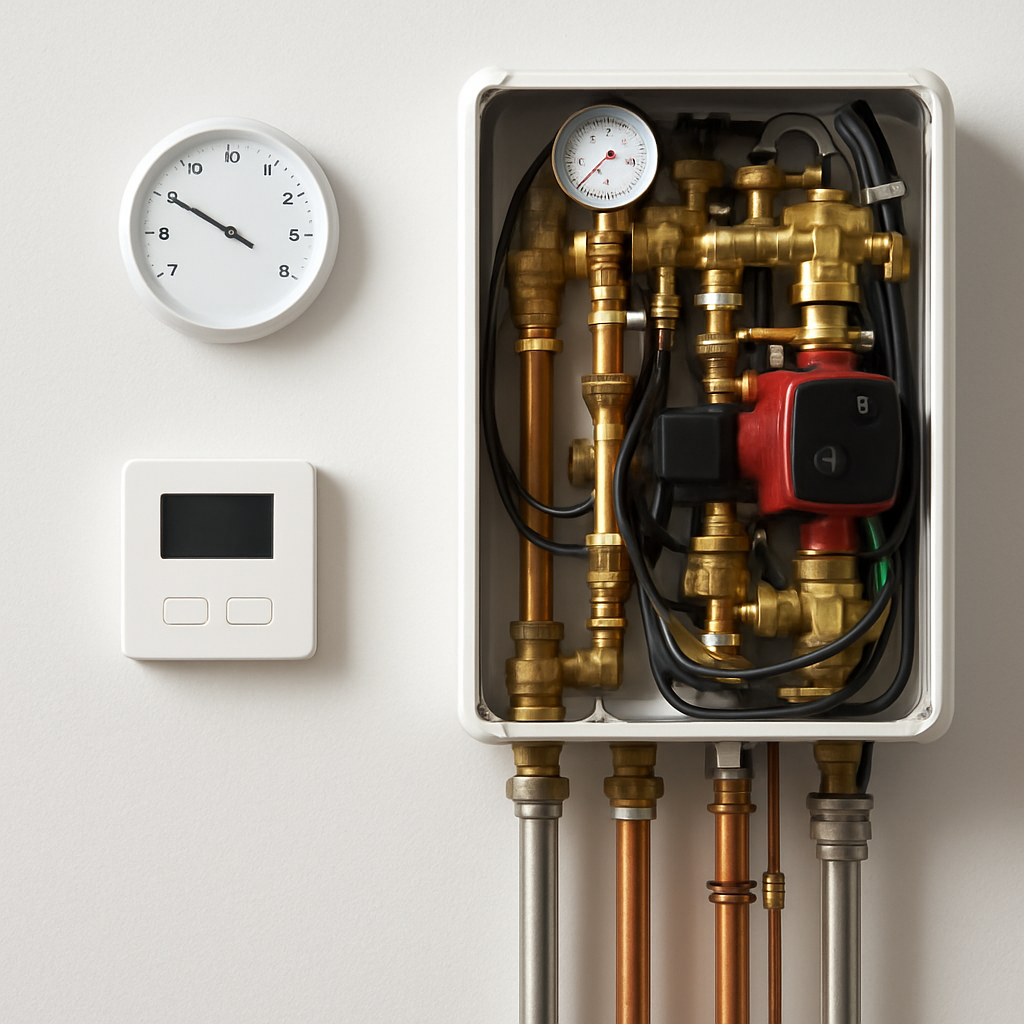
A Heat Interface Unit (HIU) is the heart of many London apartments connected to communal or district heating. Instead of a boiler in your flat, hot water from a central plantroom travels through a primary circuit to your HIU. Inside, a plate heat exchanger transfers heat into your flat’s sealed central heating loop, feeding radiators or underfloor circuits. Separate controls and, often, a second exchanger provide domestic hot water. When there’s HIU no heating, understanding this flow helps pinpoint what’s wrong.
In normal operation, a room thermostat and programmer call for heat. The HIU’s heating valve (a motorised 2‑port actuator or modulating valve) opens, differential pressure is controlled, and secondary water circulates—either via the HIU’s internal pump or your system pump—through radiators. Sensors and control boards ensure safe temperatures and efficient operation. If radiators stay cold, the fault may lie with power and controls, restricted flow, a failed actuator, a blocked strainer, or even an issue with the building’s primary supply temperature or pressure.
Start with simple checks any resident can do safely. Confirm the HIU has electrical power: is the spur switched on, is the fuse intact, and is the display lit? Verify the programmer is set to “heating on,” not summer or standby mode. Check the room thermostat is above current room temperature and that individual TRVs on radiators are open. If your HIU or secondary loop has a pressure gauge, ensure it’s within the recommended band (commonly around 1.0–1.5 bar when cold). Low pressure on the secondary side causes airlocks and no circulation; if a clearly labeled filling loop is present and you’re allowed to use it, carefully top up—otherwise, call an engineer.
Distinguish the symptom precisely: is there no heating but hot water is fine, or is both heating and hot water affected? “No heating, hot water OK” often suggests a CH-side issue—like a seized heating valve, failed pump, or blocked secondary filter. “No heating and no hot water” points to a primary-side problem—such as a clogged primary dirt strainer, very low plant temperatures, or isolation valves shut. Intermittent heat could be caused by a fouled exchanger, incorrect differential pressure settings, or failing sensors that cause the HIU to cycle off prematurely.
Top Faults Behind HIU ‘No Heating’ and How Pros Diagnose Them
When an engineer attends a HIU no heating callout, a structured diagnostic approach quickly narrows the fault. First, supply conditions: is the primary flow from the riser hot enough, and is there adequate pressure/differential pressure? If multiple flats report issues simultaneously, the plantroom or riser may be at fault. A single-flat problem more often indicates a local HIU or secondary loop issue.
One of the most common culprits is a blocked primary or secondary strainer. HIUs protect delicate parts with fine mesh strainers that trap debris and magnetite. As they clog, flow collapses, plate heat exchangers starve, and radiators run cold. Cleaning strainers and confirming clean flow immediately restores many systems. A fouled plate heat exchanger is another frequent find; limescale or sludge reduces heat transfer, so the unit may sense high temperatures but deliver little to the radiators. Depending on the build-up, engineers may chemically clean, flush, or replace the exchanger.
Control and actuation faults are next on the list. A stuck or failed 2‑port heating valve actuator will not open when heat is demanded. Telltale signs include the actuator not moving during a call for heat or manual lever resistance. Similarly, a faulty NTC temperature sensor can misreport temperatures, causing the controller to shut the valve prematurely. A defective control PCB may fail to energise the pump or valve at all. Where the HIU has an internal pump, seized bearings, incorrect speed settings, or airlocks will stop circulation. Engineers check for voltage at the actuator, listen for the pump, bleed air, and test sensor readings to verify operation.
Secondary loop problems often masquerade as HIU faults. Low pressure due to a passing pressure relief valve, a ruptured expansion vessel (losing charge), or persistent air can halt flow. Radiators furred up with sludge hinder circulation and create cold spots. Here, targeted radiator bleeding, inhibitor dosing, or a full powerflushing of the secondary circuit can restore performance. On underfloor systems, a stuck mixing valve or closed manifold actuators produce similar symptoms; balancing and actuator checks resolve these.
Engineers also verify configuration: wrong differential pressure controller settings, isolation valves left partially shut after previous works, or an incorrectly set bypass can all push heat away from radiators. Measured data—primary/secondary temperatures, ΔT, dp, and flow rates—guide adjustments. Where the building supply is the constraint, coordination with the plantroom team is vital. If you’re searching for professional help with HIU no heating issues, fast diagnostics and fixed-price repairs from experienced London HIU specialists prevent prolonged downtime and unnecessary costs.
Maintenance, Prevention, and London Case Studies to Keep Heat Flowing
Preventing no heating incidents starts with regular HIU servicing. Annual checks on communal systems are best practice for landlords and property managers, and they’re equally valuable for owner-occupiers. A thorough service includes cleaning primary and secondary strainers, inspecting actuator travel, testing pump performance, confirming correct dp settings, verifying sensor accuracy, and ensuring the plate heat exchanger achieves designed temperature differentials. Technicians also check for signs of leaks, test safety valves, examine electrical connections, and validate control logic and seasonal modes.
Water quality is critical. The HIU’s secondary loop should be protected with inhibitor to slow corrosion and reduce magnetite build-up. When radiators heat unevenly, circulation is noisy, or black sludge appears during bleeding, a professional powerflush can remove debris, improving heat transfer and protecting valves and pumps. In hard-water areas, limescale can impact the domestic hot water side first, but it also contributes to heating performance losses; descaling or plate exchanger replacement may be advised based on test results and age.
Consider a London apartment where hot water was perfect, but radiators stayed cold. The engineer found the CH actuator stuck closed despite electrical signals. Replacing the actuator and recalibrating end-stops immediately restored warmth. In another case from a riverside development, multiple flats reported intermittent heating. Investigation revealed the riser’s differential pressure fluctuated below design during peak demand. After coordination with the plantroom to correct dp and re-balance, every flat saw stable heating. A third example involved an older block in central London: repeated “no heating” calls traced to a heavily fouled secondary plate heat exchanger and clogged filter. Chemical cleaning, system flushing, and fresh inhibitor cut heat-up times dramatically and reduced residents’ energy usage as radiators no longer needed prolonged run times.
Small seasonal habits also help. Before winter, set the programmer to heating schedules that match occupancy, raise the room stat gradually, and fully open TRVs after summer. Listen for your HIU’s pump on start-up; unusual noises can signal air or wear. Keep cupboards around the HIU clear to avoid overheating electronics and to give engineers easy access. For landlords and property managers, synchronising annual HIU services with building plant maintenance ensures primary supply conditions match apartment-side commissioning—essential in high-rise schemes where dp and flow can vary by floor.
With vigilant maintenance, smart diagnostics, and professional interventions when needed, a Heat Interface Unit can deliver efficient, reliable warmth year after year—keeping London homes comfortable even on the coldest days and minimising the chances of another unexpected HIU no heating surprise.

Mogadishu nurse turned Dubai health-tech consultant. Safiya dives into telemedicine trends, Somali poetry translations, and espresso-based skincare DIYs. A marathoner, she keeps article drafts on her smartwatch for mid-run brainstorms.